Rubber Price Tiers on Amazon.co.jp: What 8,600 Yen Buys
I went through Butterfly's official spec pages and the rubber catalogue on butterfly.shop sheet by sheet, on 2026-11-24. The thing that struck me first is that the price table and the spec table barely touch each other: the expensive tier is not automatically the higher-spec one, and the lower-spec sheet is not automatically the cheaper one.
Disclosure first: this article contains Amazon affiliate links, and I earn a commission if you order through them. Your price does not change. I did not glue these sheets onto a blade and test them, so anywhere I mention how a sheet feels, that is the manufacturer's wording. When I say I verified something, it means I compared the official spec page, the official shop listing and the Amazon.co.jp product page line by line — not that I hit with it. All yen figures come from Butterfly's own pages, captured on 2026-11-24. This machine exits through mainland China, so Amazon.co.jp displays a non-yen currency (TWD in this round); the Amazon numbers below are used only to compare relative order, never converted into yen.
TL;DR: The question worth answering is not which sheet is best but what each extra thousand yen actually buys. Butterfly's shop runs five tiers from ¥3,200 to ¥13,000 tax-excluded, separated by two steps of roughly +56%, and the differences inside a tier are about direction rather than strength. The ceiling sheet is the Zyre 03, item 06140, released 1 October 2025, ¥13,000 tax-excluded (¥14,300 with tax), which buys 15 more points of spin than the ¥9,500 tier.
The shop prints two numbers; the spec page prints none
Start with the two number formats, because everything below depends on which one you are reading.
Every sheet on butterfly.shop follows the same pattern: a bare number, then the tax-included figure in brackets. Rozena reads "5,000 yen (tax included 5,500)"; Glazer reads "5,500 yen (tax included 6,050)". The first number is the tax-excluded body price, and the bracket is what you actually pay.
The brand site, butterfly.co.jp, writes it the other way: Rozena's price row says "5,500 yen (tax included)", Glazer says "6,050 yen (tax included)". The same sheet is 5,000 on one page and 5,500 on the other. The 500 yen gap is the tax.
I divided all 44 listings out: every single one equals the tax-excluded price times 1.10, no exceptions. So the tax-included reading is something you can check yourself rather than memorise: see a tax-excluded figure, multiply by 1.1; see a tax-included figure, divide by 1.1 to recover the body price the manufacturer is working from.
The more consequential detail sits halfway down the spec page. For Tenergy, Dignics and Zyre, the price row does not contain a number at all. It says "open price". The footnote at the bottom of the page reads: listed prices are manufacturer's suggested retail prices, excluding open-price items.
That footnote matters if you are buying from abroad: for the flagship lines, an official retail price does not exist. The only anchor you can compare against is the tax-excluded figure Butterfly's own shop publishes. That is why every number below uses tax-excluded pricing as the common unit.
Ten sheets share the ¥8,600 tier, spanning hardness 32 to 43
Sorted by tax-excluded price, the catalogue lands on just 16 values: 1,000 / 1,800 / 2,000 / 2,200 / 2,300 / 2,500 / 2,700 / 2,800 / 3,000 / 3,200 / 4,200 / 5,000 / 5,500 / 8,600 / 9,500 / 13,000. The ladder is not continuous; it is stepped.
The strangest step is ¥8,600, which holds the entire Tenergy family: 05, 05 FX, 05 Hard, 19, 80, 80 FX, 64, 64 FX, 25 and 25 FX. All ten are ¥8,600 tax-excluded, ¥9,460 with tax.
Their official sponge hardness runs from 32 to 43. Tenergy 05 FX sits at 32; Tenergy 05, 80 and 19 at 36; Tenergy 05 Hard at 43. That is 11 points of hardness for zero yen. The spin figures spread wider still: 05 FX is rated 64, 05 Hard is rated 96 — 32 points apart, same price.
Inside this tier, then, harder and spinnier does not mean more expensive. What you pay for is the right to choose a direction, not extra performance. That is worth stating plainly because the internet usually argues the opposite.
Hardness 35 appears at ¥4,200, ¥5,000 and ¥8,600
If hardness drove price, sheets of equal hardness would cost the same. They do not.
Roundell is rated 35 and sells for ¥4,200 tax-excluded. Rozena is also rated 35 and sells for ¥5,000. Tenergy 05 is 36 and sells for ¥8,600. Three sheets at effectively the same hardness, spread across ¥4,200 to ¥8,600.
What separates them is visible on the same spec rows: speed and spin. Roundell is 77 speed and 43 spin; Rozena is 83 and 70; Tenergy 05 is 83 and 76. Rozena and Tenergy 05 have identical speed ratings, six points of spin between them, and ¥3,600 between their prices.
This is the other side of the argument I made in the piece on why the three hardness scales cannot be compared: that article covered cross-brand scales, and this one adds that within a single brand, price does not follow the scale either. Hardness describes the sponge; price describes the product line.
The ¥5,500 tacky sheet out-spins the ¥9,460 flagship
Here is the comparison that stings.
Glazer 09C is a tacky high-tension inverted sheet: official hardness 42, speed 75, spin 87, arc 95, ¥5,500 tax-excluded (¥6,050 with tax). Tenergy 05 is a high-tension inverted sheet: hardness 36, speed 83, spin 76, arc 79, ¥8,600 tax-excluded (¥9,460 with tax).
The sheet that costs ¥3,100 less is rated higher on both hardness and spin. The expensive one wins on speed, 83 against 75.
Nobody mislabelled anything. These are two different design directions. Tacky topsheets grip the ball, trading speed for spin; Tenergy relies on sponge elasticity to launch it, trading arc height for speed. The extra ¥3,100 does not buy stronger numbers, it buys a different way of sending the ball out.
If your game is close-to-table counterdriving, Glazer 09C's speed rating of 75 will cost you. If you are coming from a Chinese tacky sheet, the ¥5,500 tier is the cheaper entry. That tier holds two sheets, Glazer (38 hardness, 81 speed, 73 spin) and Glazer 09C, both ¥5,500.
The real steps are technical lines, not vintages
Rank the 16 price values by the size of the jump and two steps stand out.
From ¥3,200 to ¥5,000 is a ¥1,800 rise, 56.3 percent. From ¥5,500 to ¥8,600 is a ¥3,100 rise, 56.4 percent. Both are about +56 percent; the 10-to-30 percent increments in between do not qualify as steps.
What those two steps cross is written in the type field. Sriver (¥3,200 tax-excluded) is listed simply as inverted rubber, with speed 38 and spin 23; Flextra (¥2,000) is likewise a non-tension sheet at speed 29 and spin 10. From Rozena at ¥5,000 upward, every sheet is labelled high-tension inverted, and the speed rating jumps straight past 77.
So the first +56 percent buys entry into the tension line, and the second takes you from the entry sheet of that line (Glazer, ¥5,500) to the flagship line (Tenergy, ¥8,600). Sriver dates from 1967 and Flextra from 1991; both are still in the catalogue and both occupy the bottom of the price table, but their speed ratings of 38 and 29 are not on the same scale as the flagship line's 82 to 88.
One caveat: speed, spin and arc are the manufacturer's own relative scales, not physical units. What I verified is how Butterfly labels them, not how much they differ in play.
The ¥13,000 tier buys 15 points of spin
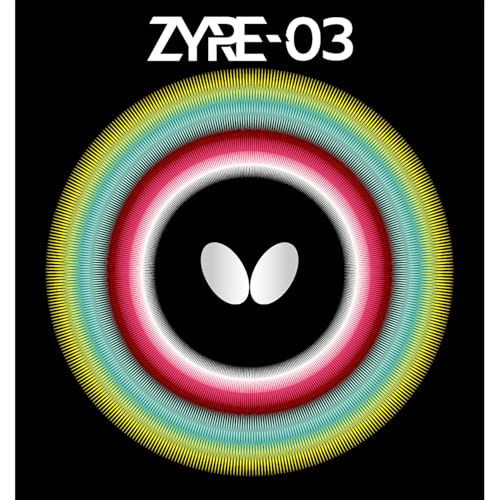
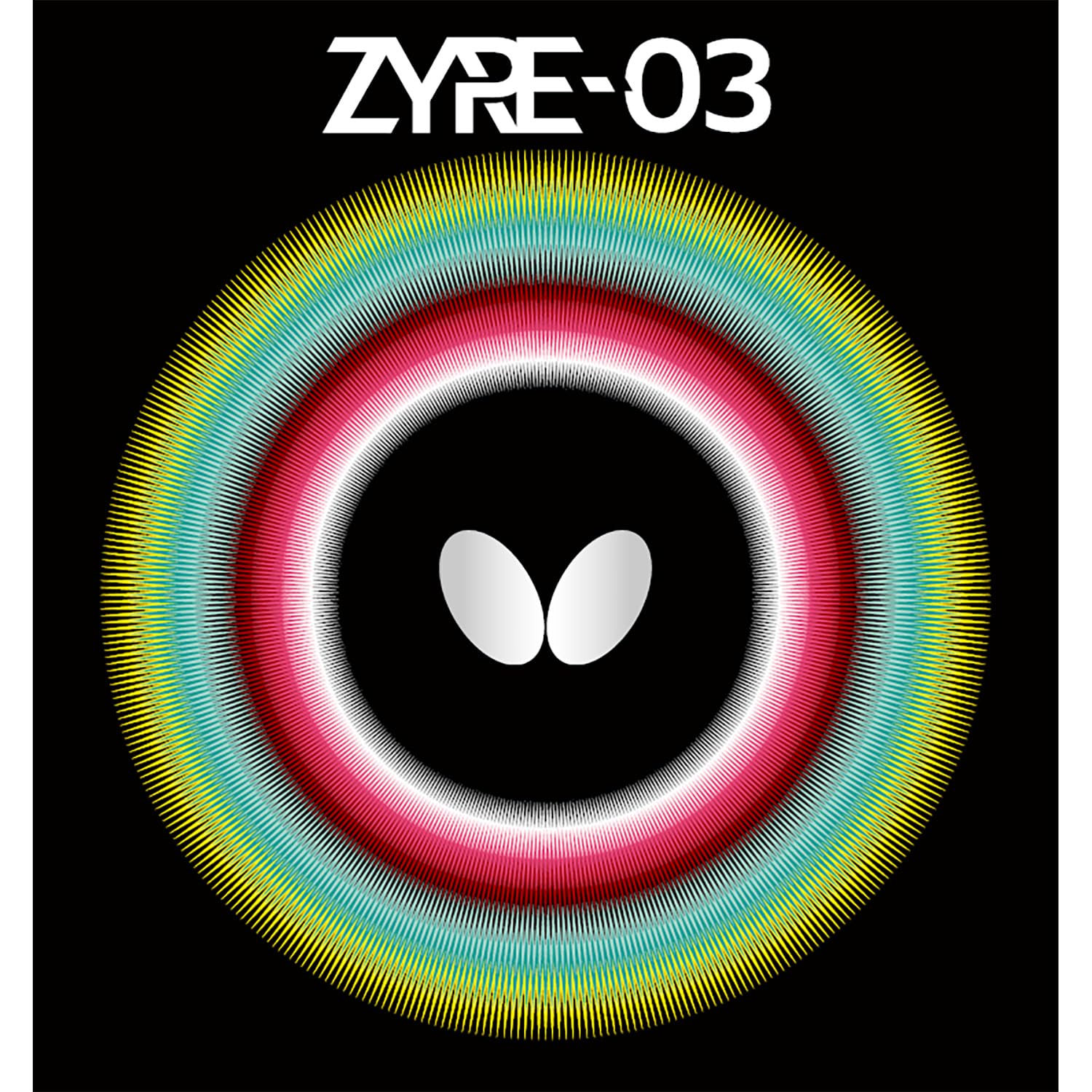
There is exactly one sheet at the ceiling: Zyre 03, item 06140, released 1 October 2025, ¥13,000 tax-excluded (¥14,300 with tax).
Its official figures are the highest on the table: hardness 44 (one point above Tenergy 05 Hard's 43), speed 88 (level with Dignics 80), spin 100 (the only sheet rated 100), arc 96.
Against Dignics 05 at ¥9,500: spin 100 versus 85 (+15), speed 88 versus 86 (+2), hardness 44 versus 40 (+4), for ¥3,500 more. Against Tenergy 05 Hard at ¥8,600, the spin gap is only 4 points and the speed gap 6.
So the ceiling money goes into the spin limit, not into speed. If you play a spin-first game, that ¥3,500 has something to buy. If you only want more speed, Tenergy 80 is rated 85 and Tenergy 05 is rated 83 in the ¥8,600 tier — 3 to 5 points off the ceiling.
24 of 44 sheets are out of stock: how to substitute inside a tier
I counted the stock badges across all 44 listings on the official shop: 24 currently read sold out. That is more than half, and the distribution is uneven — the higher the price, the more concentrated the gaps.
Zyre 03 at the ceiling is out of stock. In the ¥9,500 tier, three of four (Dignics 05, 09C and 80) are out, leaving only Dignics 64. Both sheets in the ¥5,500 tier (Glazer and Glazer 09C) are out. The ten Tenergy sheets at ¥8,600 were all in stock this round.
The key sentence is this: sold out is not discontinued. All 24 still have their item numbers on the official spec pages, with release dates, hardness and speed unchanged; the shop side simply has no stock. To judge discontinuation, look at whether the sheet is still in the official catalogue, not at the stock badge.
Substitution paths by tier: in the ¥9,500 tier, the only in-tier swap is Dignics 64, or you step down to the ¥8,600 Tenergy line. In the ¥5,500 tier both sheets are out, so there is no in-tier substitute and you either step down to Rozena at ¥5,000 or step up to ¥8,600. At ¥3,200, Sriver is in stock while Sriver EL is out.
Jumping tiers to restock is the move I would avoid. Going from a sold-out ¥5,500 sheet to an ¥8,600 sheet because it is "harder" spends ¥3,100 on a different design: Glazer 09C at ¥5,500 is rated hardness 42, harder than Tenergy 05 at ¥8,600 with its rating of 36. Swap inside the tier, and wait for the next shipment if the tier is empty.
On Amazon.co.jp the order holds, but equal-price sheets split apart
I actually verified each Amazon.co.jp listing one by one, using the product title being parseable as the test rather than an HTTP 200. Prices as displayed this round (currency TWD) line up with the official tiers: Zyre 03 2,975, Dignics 80 1,657, Tenergy 05 FX 1,454, Tenergy 05 Hard 1,426, Glazer 09C 980, Rozena 866, Roundell 813, Sriver 573.
The order matches the official tax-excluded ladder exactly: the ceiling sheet is dearest and Sriver cheapest. That layer is safe to use as a relative coordinate.
But sheets that share a price officially are split apart on Amazon: Tenergy 05 Hard and Tenergy 05 FX are both ¥8,600 from Butterfly, yet the displayed Amazon prices differ by about 2 percent (1,454 against 1,426). That is small, but it shows Amazon pricing follows individual sellers rather than copying the official ladder.
One gap is worth more attention. Searching three keyword sets for Dignics 05 (item 06040) returned only bundle listings, with no single-sheet product page. In practice, the single sheet you can actually buy from the ¥9,500 tier on Amazon is Dignics 80 (item 06050).
Here are the listings tier by tier. At the ceiling is Zyre 03 06140, ¥13,000 tax-excluded officially, 2,975 as displayed.
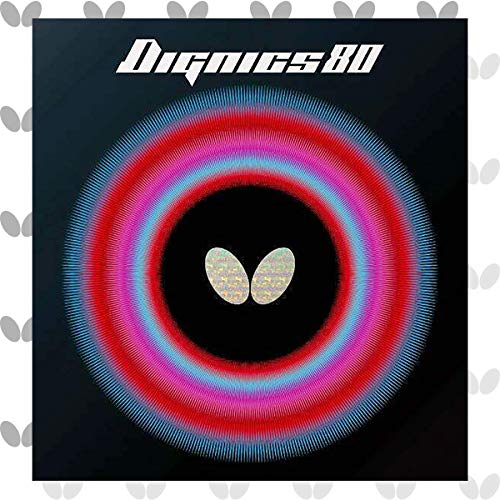
The single sheet you can actually get in the ¥9,500 tier is Dignics 80 06050, ¥9,500 tax-excluded officially, 1,657 as displayed.

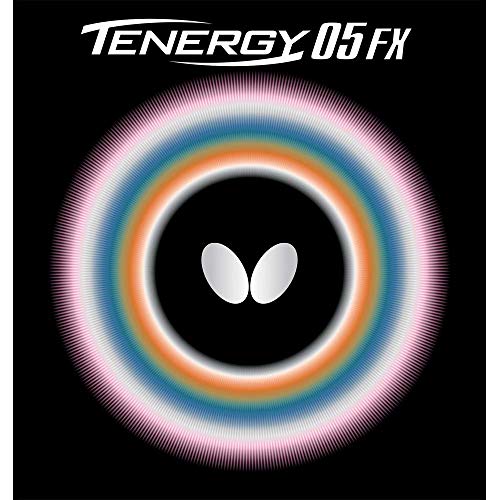
In the ¥8,600 tier the spin leader is Tenergy 05 Hard 06030, ¥8,600 tax-excluded officially, 1,426 as displayed.


The opposite-direction sheet at the same official price is Tenergy 05 FX 05900, official hardness 32 and spin 64, 1,454 as displayed.

The tacky sheet in the ¥5,500 tier is Glazer 09C 06110, ¥5,500 tax-excluded officially, 980 as displayed.


The entry sheet in the ¥5,000 tier is Rozena 06020, ¥5,000 tax-excluded officially, 866 as displayed.

At ¥4,200, Roundell 05860 is ¥4,200 tax-excluded officially and 813 as displayed. It shares Rozena's hardness, and the ¥800 gap buys speed 77 against 83.
At ¥3,200, Sriver 05050 is ¥3,200 tax-excluded officially and 573 as displayed, the cheapest tier on the table.

The ¥10,000 customs line sits between 9,500 and 10,450
In the cost structure of importing sheets, one thing is easier to get wrong than the price gap: shipments for personal use are exempt from duty and consumption tax when the dutiable value is below ¥10,000, and taxable above it.
Run the two official numbers against that line. A single ¥8,600 sheet is ¥9,460 with tax — below the line on either reading. Two sheets are ¥17,200 or ¥18,920 — above it on either reading. So the ¥8,600 tier reaches the same conclusion regardless of which number you use: one is exempt, two are not.
The ¥9,500 tier is the one place where the reading flips the answer. Tax-excluded it is ¥9,500, below the line; tax-included it is ¥10,450, above it. On the same single sheet, the two numbers point opposite ways.
The boundary has to be stated: dutiable value is not the same as the sticker price — it includes shipping and insurance, and the conversion is decided by customs, so this article does not offer a formula. The exemption for personal-import parcels is also scheduled to end on 1 April 2028, according to the reform direction published by customs and the Ministry of Finance, so the line itself has an expiry date.
The ordering rule therefore gets simpler: do not stuff two sheets from the same tier into one shipment to save on postage, because that is exactly how you cross the line. One flagship sheet, or two entry sheets, is safer than three mixed.
Four checks before you order
First, read the tax-excluded number before the tax-included one. Tax-excluded times 1.10 is what you pay, and that 10 percent changes the answer near the ¥10,000 line.
Second, go by item number rather than marketing name. Amazon titles carry the item number (06030, 06050, 06140 — five digits), and the official spec pages use the same code. A family with 05, 05 FX and 05 Hard in it is easy to misread by name and hard to misread by code.
Third, substitute inside the tier when something is out of stock. With both ¥5,500 sheets gone, stepping down to Rozena at ¥5,000 makes more sense than stepping up to ¥8,600, because the step up buys a different product line rather than a harder version of the same sheet.
Fourth, treat prices as captured-at-time values. Amazon pricing follows sellers and this machine still sees a non-yen currency; the official shop's tax-excluded prices are steadier, but stock badges move. Check both again on the day you order.
If you are also choosing a blade, that logic is separate from rubber: blades are about tier and feel, which I covered in the Viscaria versus Fan Zhendong ALC comparison; shoes use yet another coordinate system of item codes and last widths, covered in reading Mizuno 81GA codes and 2E/3E widths. Keeping the three decisions apart is clearer than folding them into one comparison table.
FAQ
Q: Which sheet should I pick inside the ¥8,600 tier?
Decide whether you want speed or spin first. On the official ratings Tenergy 80 at speed 85 is the fastest in the tier, Tenergy 05 Hard at spin 96 is the spinniest, and Tenergy 05 FX at hardness 32 is the softest. All three cost ¥8,600; you are choosing a direction, not a rank.
Q: Does a harder sheet cost more?
Not within one brand. Roundell at hardness 35 sells for ¥4,200 while Tenergy 05 at 36 sells for ¥8,600; Glazer 09C at hardness 42 sells for ¥5,500, which is ¥3,100 less than Tenergy 05 at 36. Price follows the product line, not the hardness number.
Q: If Amazon has no listing for a sheet, is it discontinued?
Check the official catalogue first. Discontinuation is about whether the item number is still on the spec page, not about whether a shop has stock. When I checked, Dignics 05 was sold out on the official shop and existed on Amazon only as bundles, yet its spec page was intact: item 06040, released 1 April 2019.
Q: Can I compare Amazon's displayed price directly with the official price?
Not by dividing one by the other. Amazon is showing a non-yen currency this round (TWD) with a conversion layer and seller pricing in between, so what transfers is relative order, not a multiplier. For absolute figures, compare only Butterfly's own tax-excluded and tax-included pair.
Closing
The most useful thing about this price table is that it admits it is not ordered by performance. Ten sheets share ¥8,600 with 11 points of hardness between them; a ¥5,500 tacky sheet out-spins the flagship; and the two +56 percent steps cut across technical and product lines rather than specifications.
So the buying order should be reversed: set the tax-excluded budget per sheet to fix the tier, pick a direction inside that tier, and only then check stock. Get the tier wrong and every later choice is paying for something you did not need.
👉 Join Xiaomi MiMo Platform: Leading AI model platform with cost-effective inference
👉 Join Aliyun AI: Top AI products with exclusive coupons for business innovation
📌 This article was AI-assisted generated and human-reviewed | TechPassive — An AI-driven content testing site focused on real tool reviews
🔗 Recommended Tools
These are carefully selected tools. Using our affiliate links supports us to keep producing quality content:
As an Amazon Associate, I earn from qualifying purchases at no extra cost to you.